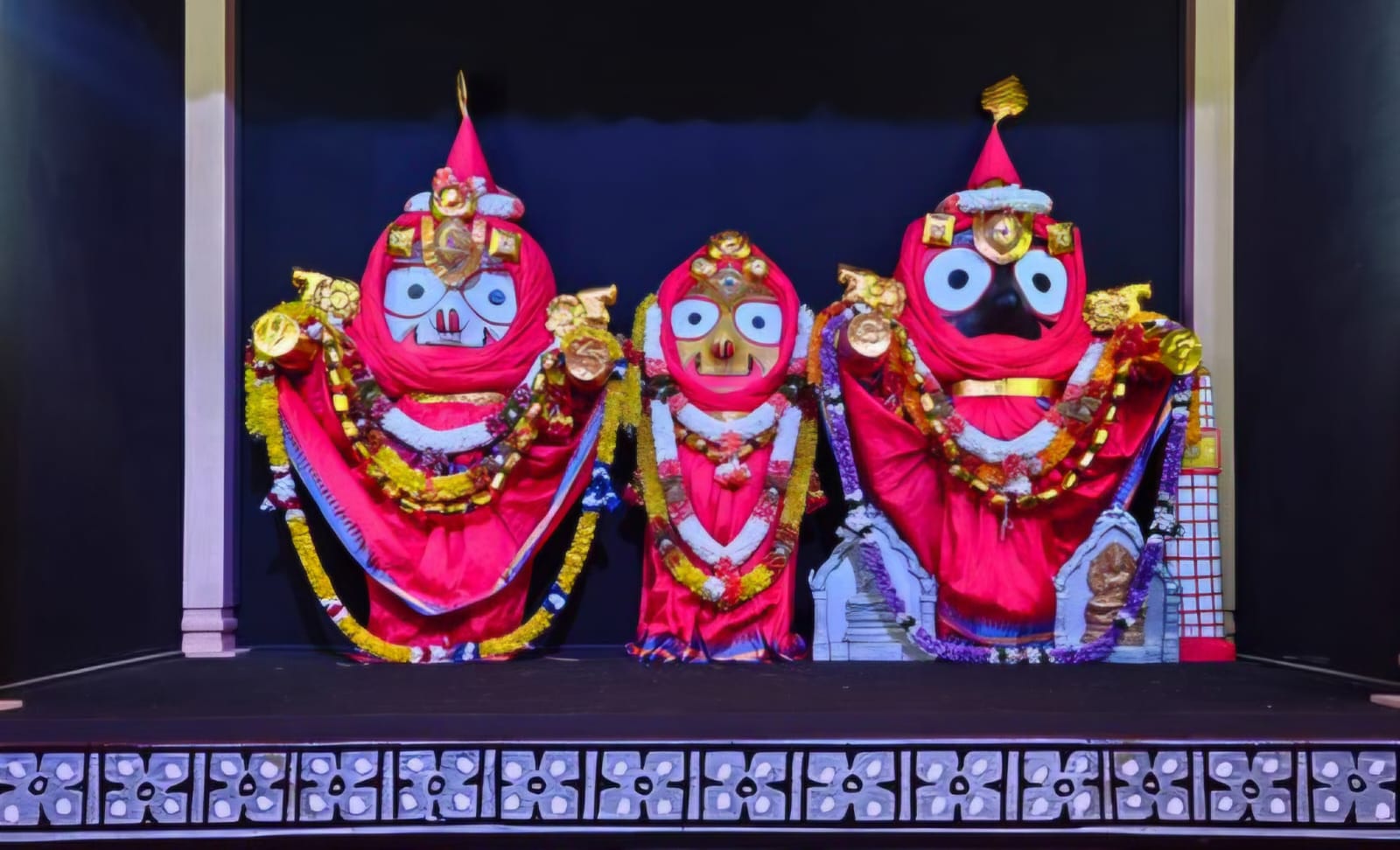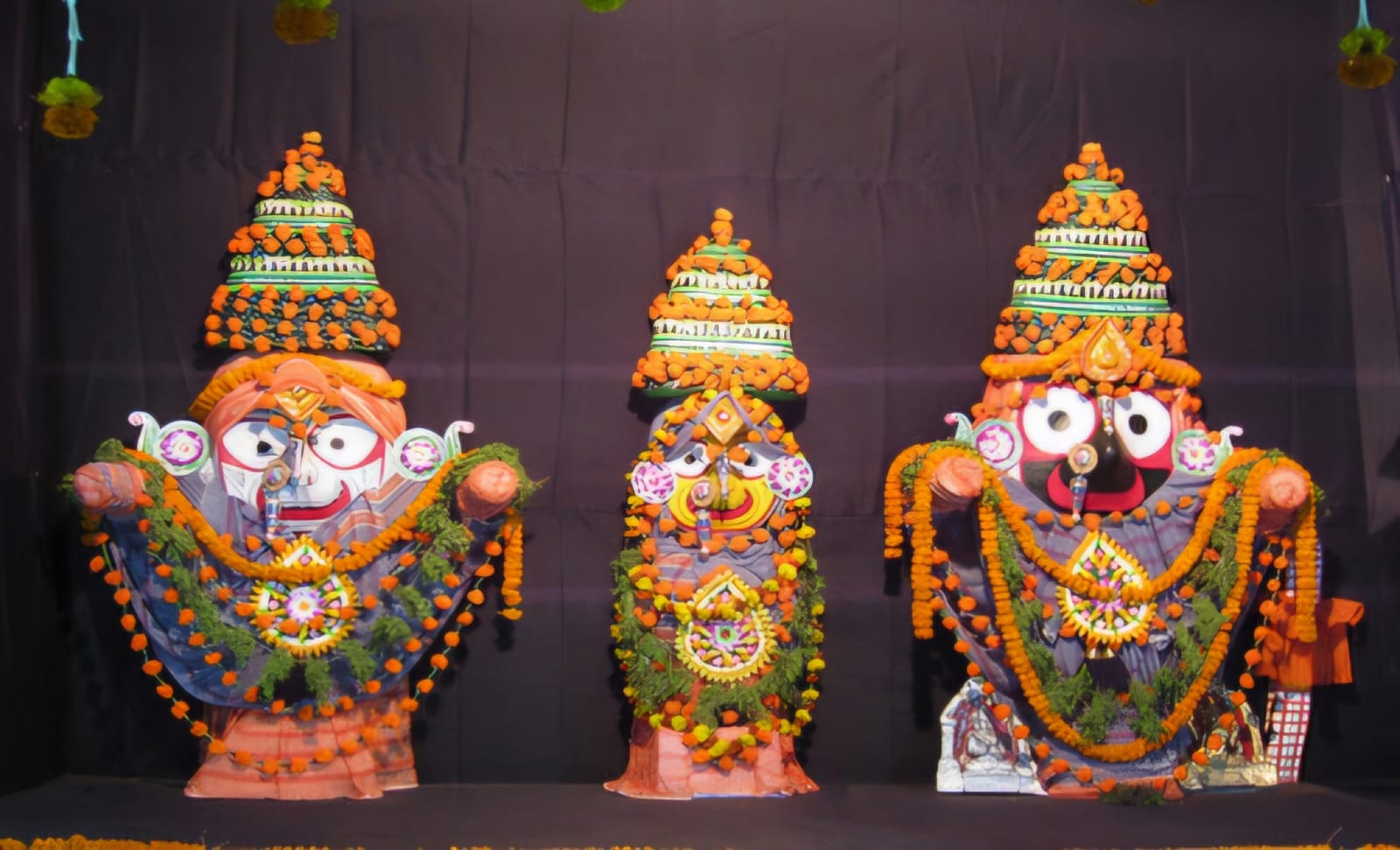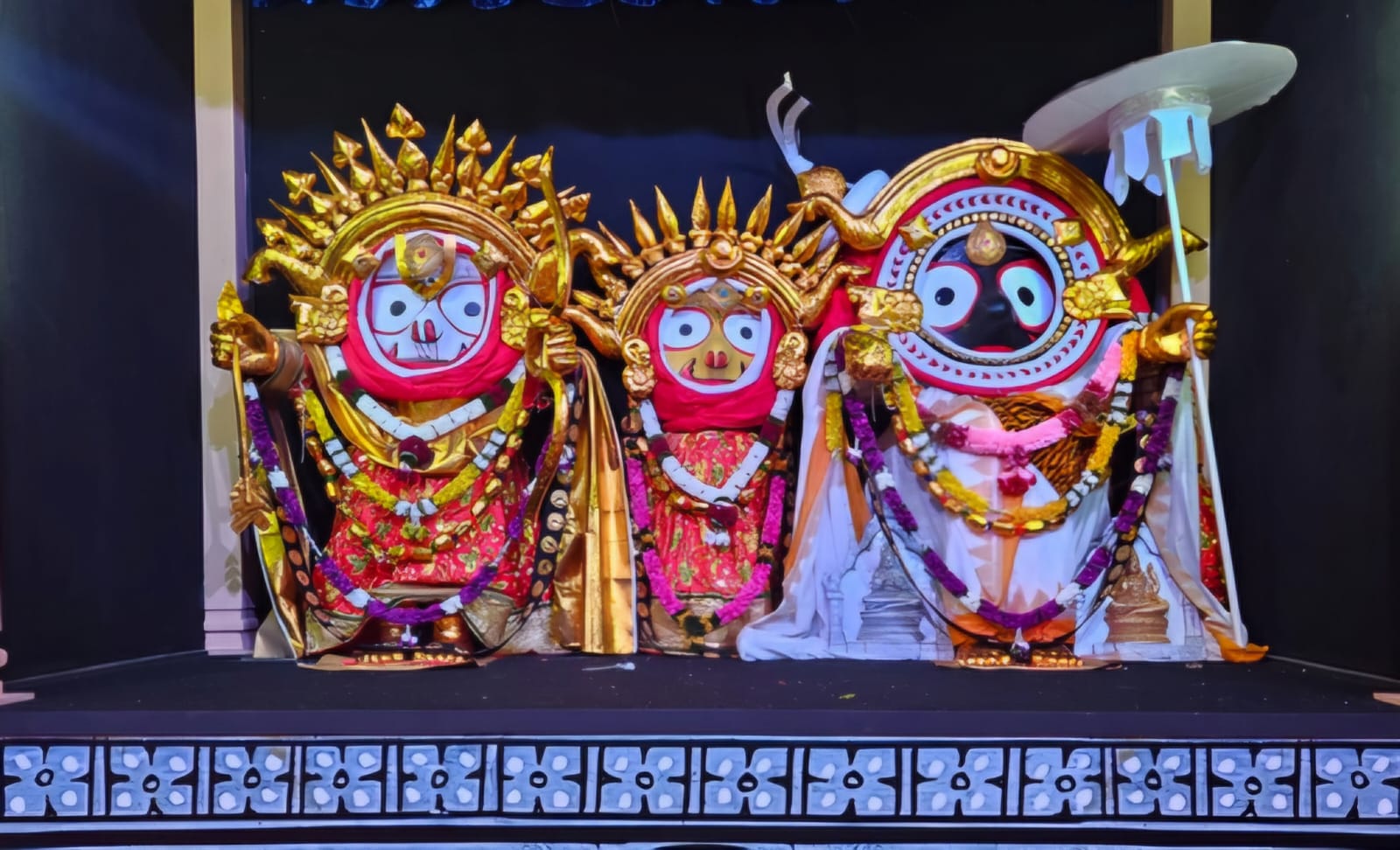
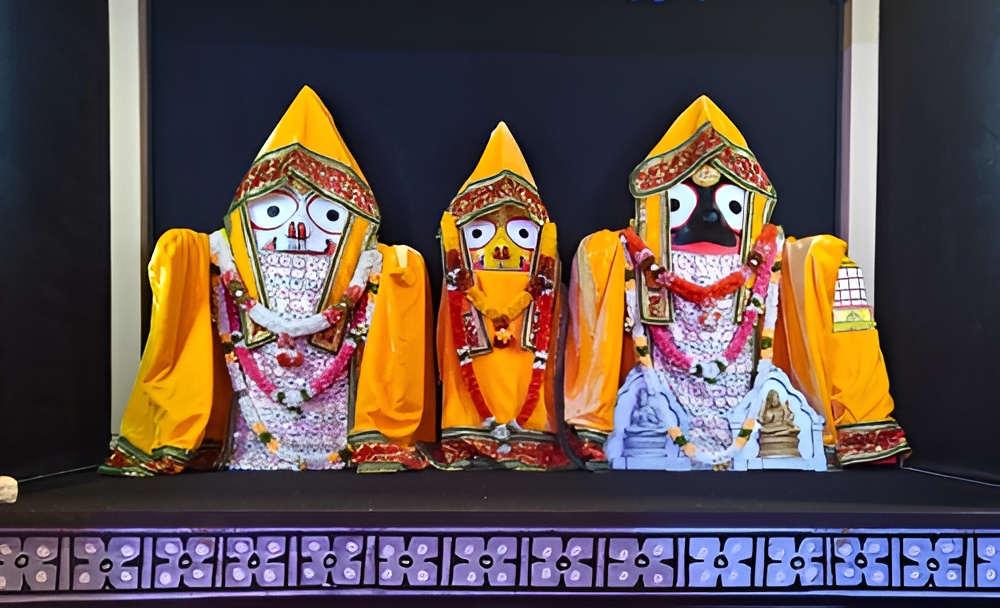
Ghodalagi Besha is a winter attire of the deities at the Jagannath Temple. In this besha, Lord Jagannath, Lord Balabhadra, and Goddess Subhadra are dressed with warm clothes like socks, caps, and special winter garments to protect them from the cold season. It usually begins from the month of Margashira (November–December). This besha reflects the loving care and human-like treatment offered to the deities in the temple rituals.
When this Besha observed?
From Margasira Shasthi, Lord Jagannath begins to wear winter clothes in a proper ritual manner.
From Margashira Shashthi, the ritual called Ghodalagi begins and continues for 60 days until Vasant Panchami in the month of Magha. During this period, the deities are dressed with warm coverings to protect them from the cold.
About Ghodalagi Besha :
Lord Jagannath, the Lord of the universe, is associated with the saying that there are thirteen festivals in twelve months. Many journeys, festivals, and rituals are celebrated in the Jagannath Temple. Just as during the summer season the Chandana Lagi ritual is performed to protect the Lord from heat, similarly during the Margashira month, when the cold becomes intense, the Chaturdha Murti—Lord Jagannath, Balabhadra, Subhadra, and Sudarshana—wear winter clothes known as Ghodalagi (warm coverings).
In the Ghodalagi Besha, the deities are adorned with thick cotton cloth (Gada), Khandua silk, velvet coverings, Futa, and Topor. These warm coverings are usually made of velvet and cotton fabric, prepared in a special traditional style by the temple’s hereditary tailor servitors.
According to tradition, the deities wear different colored Ghodabastr (winter coverings) on each day of the week:
Sunday: Red Ghodabastr
Monday: White cloth with black spots
Tuesday: Barapatia (five-colored striped cloth)
Wednesday: Blue cloth
Thursday: Yellow cloth
Friday: White cloth
Saturday: Black cloth
Astrologers say that these seven colors represent the seven planets. The required winter garments for Lord Jagannath, Balabhadra, and Subhadra are specially prepared by the temple’s traditional tailor servitors in a distinctive style.
Special Features of Ghodalagi Besha
Begins on Odhana Shashthi (Pravarana Shashthi)
The besha starts on Margashira Shukla Shashthi, when the Lord begins to wear winter garments.
Continues for about 60 days
The ritual continues from Margashira month until Vasant Panchami in Magha, covering the peak winter period.
Winter protection for the deities
During this time, the deities wear warm coverings (Ghodabastr) to protect them from cold weather.
Special winter garments used
The Lords are dressed with thick cotton cloth (Gada), Khandua silk, velvet coverings, Futa, and Topor, which are suitable for winter.
Prepared by traditional temple tailors
The winter garments are specially prepared in a traditional style by the hereditary tailor servitors (Darji Sevayats) of the temple.
Different colors for each weekday
The deities wear different colored Ghodabastr every day of the week (red, white, blue, yellow, black, etc.).
Symbol of seven planets
The seven colors of the coverings are believed to represent the seven planets according to astrology.
Adorned on the Chaturdha Murti
The attire is worn by Lord Jagannath, Balabhadra, Subhadra, and Sudarshana.