Trivikrama Besha
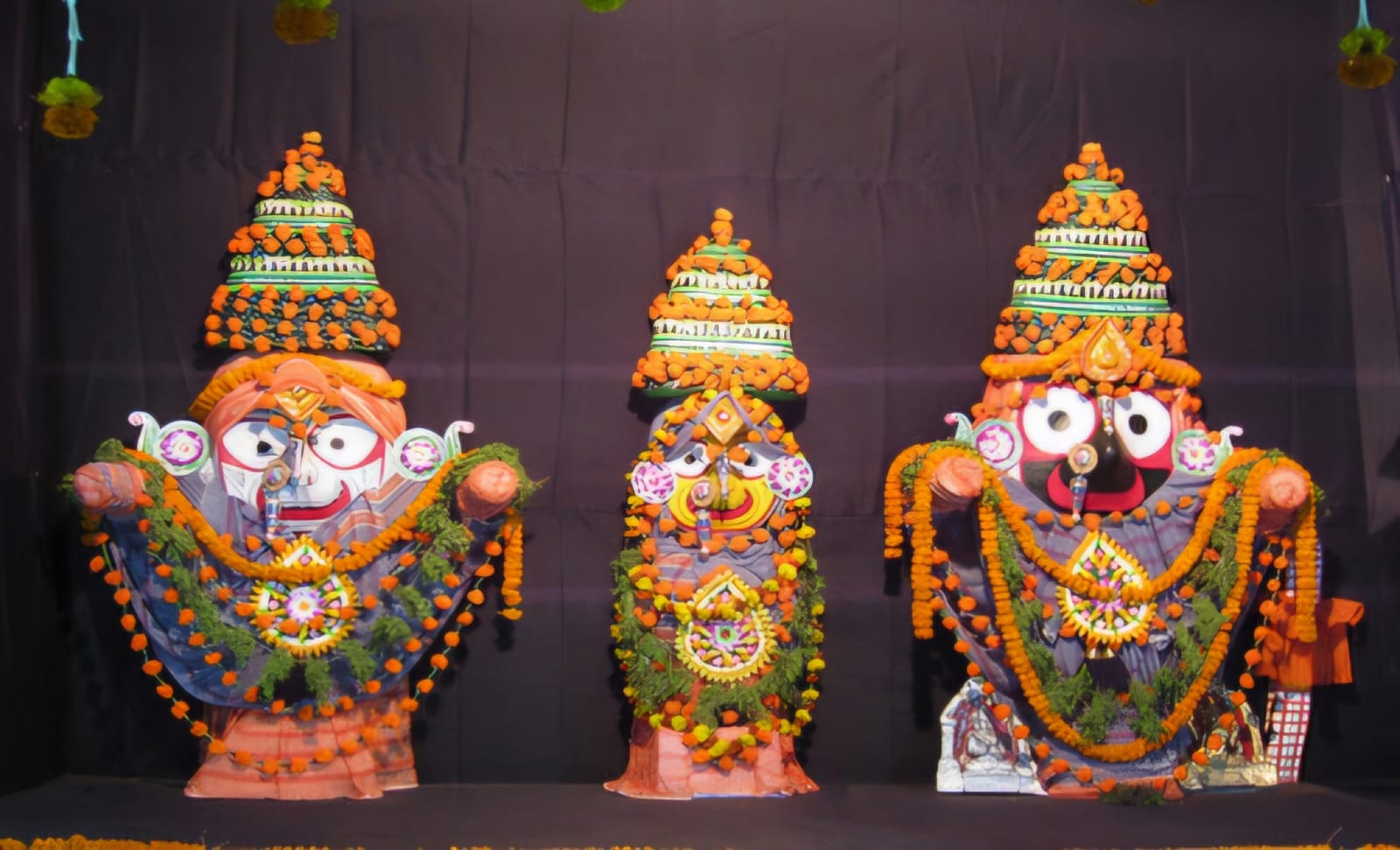
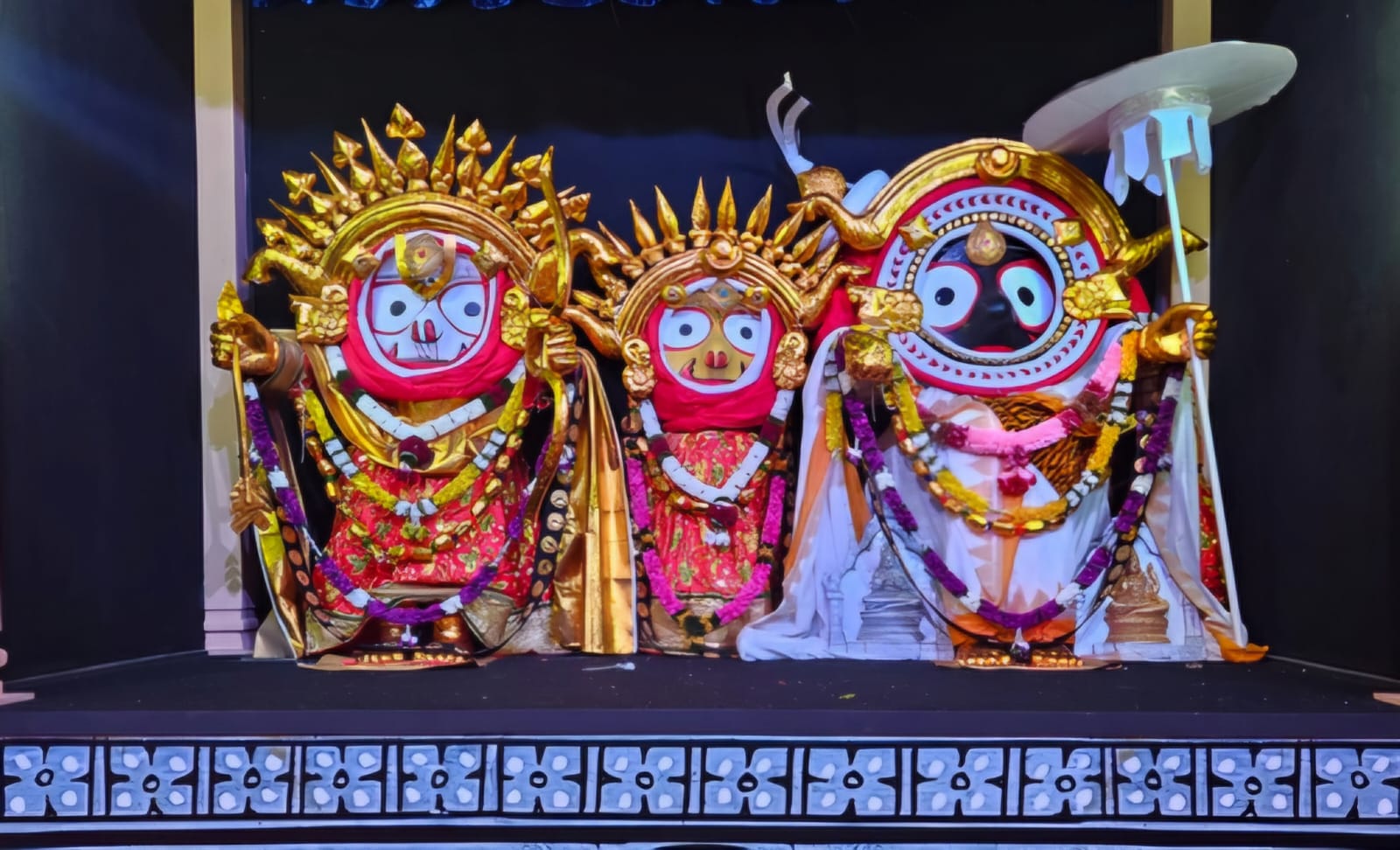
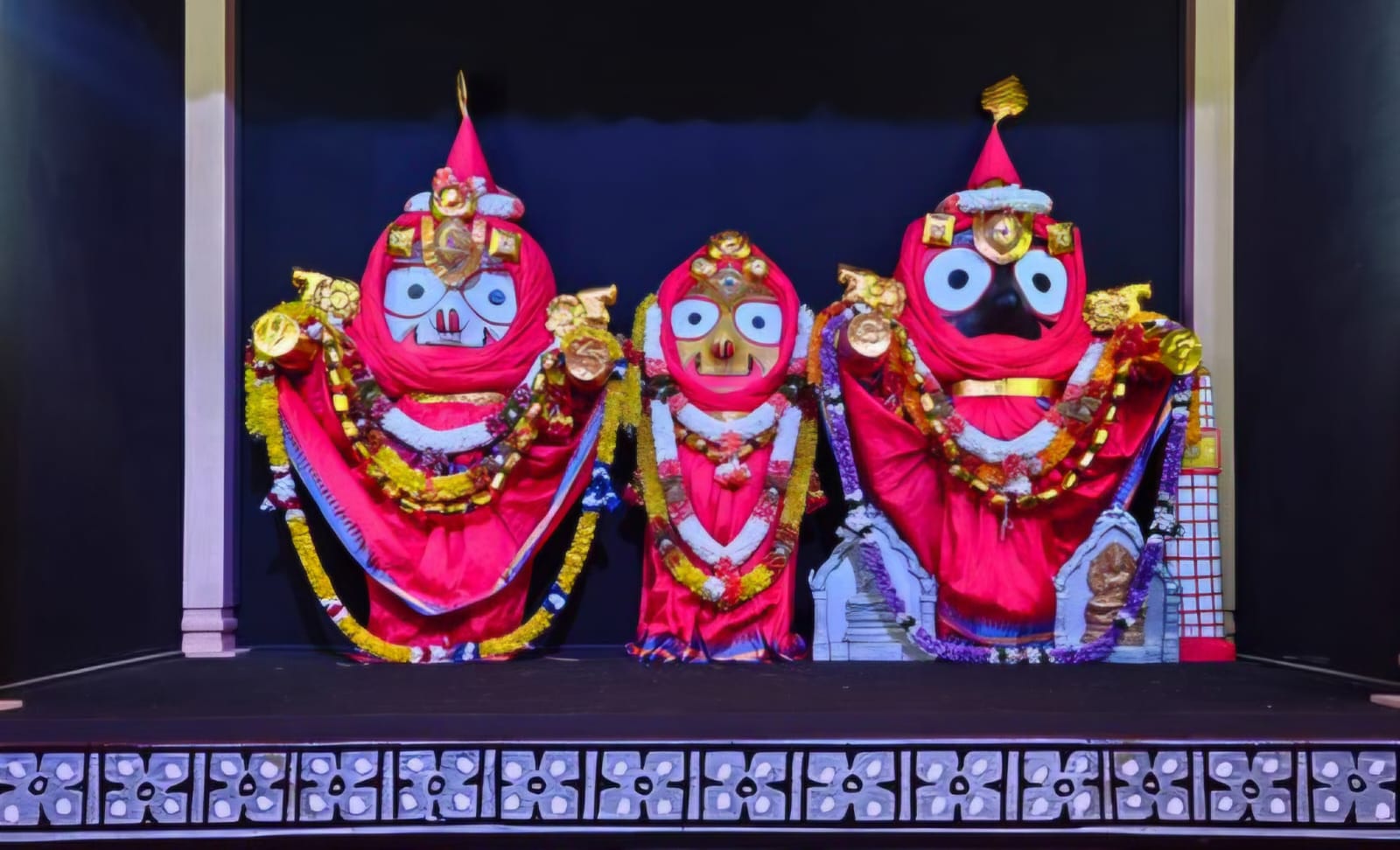
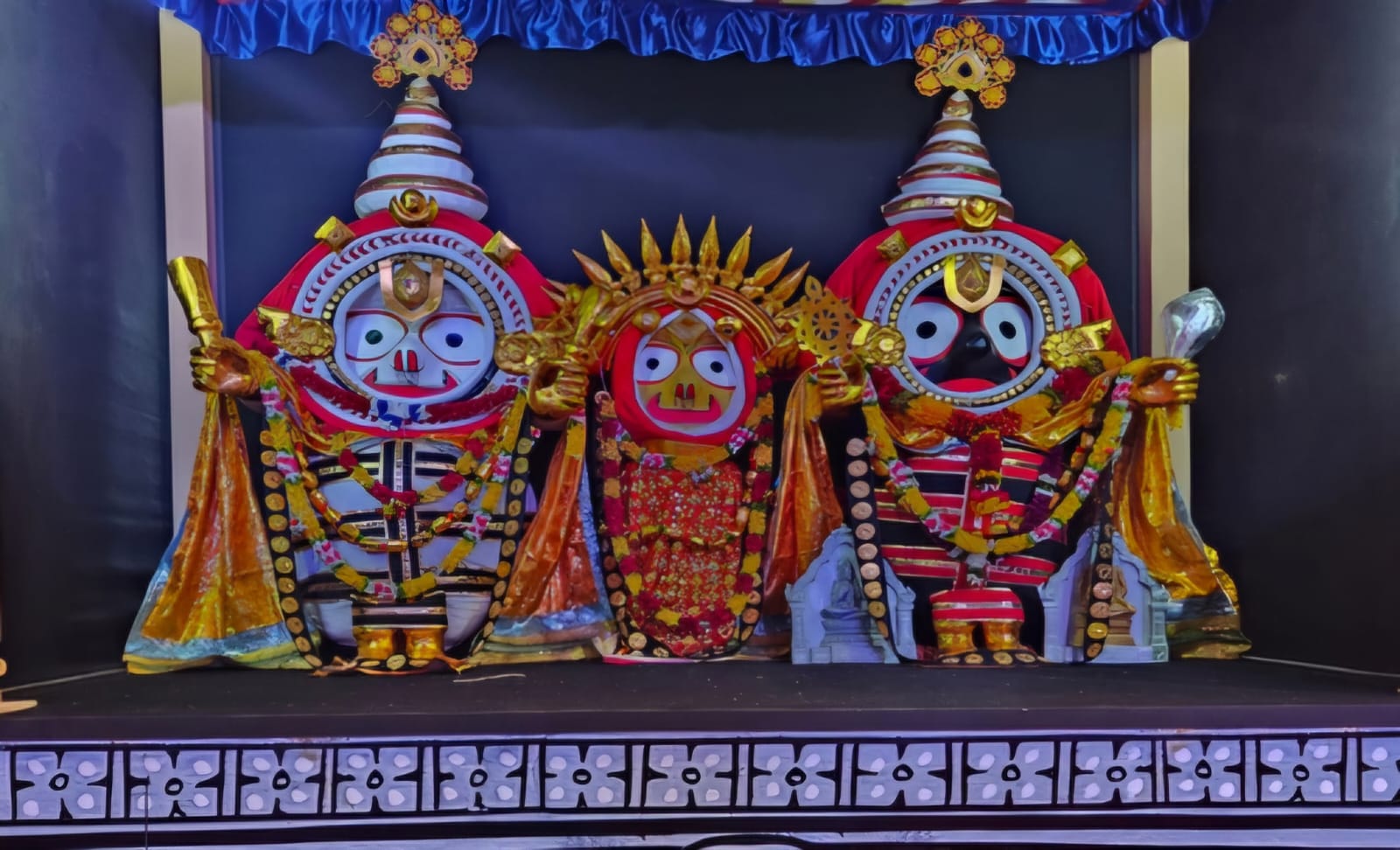
Trivikrama Besha is one of the sacred veshas (attires) of Lord Jagannath at the Jagannath Temple. In this besha, Lord Jagannath is worshipped as Trivikrama, the cosmic form of Lord Vishnu.
When is Tivikrama Besha Observed?
On the Trayodashi (13th day) of the bright fortnight of the Kartika month, the Adakia or Trivikrama Besha of the deities is observed in the temple. On that day, after the Abakasha Niti (morning purification ritual) of the deities is completed in the early morning, this attire ceremony begins. The Pushpalaka servitors perform and arrange this special besha.
About Trivikrama Besha :
The Trivikrama Besha of Lord Jagannath in the Jagannath Temple is connected with the famous incarnation of Lord Vishnu as Vamana.
History behind Trivikrama Besha
According to Hindu mythology, the powerful demon king Mahabali ruled the three worlds and became very proud of his power. To control his pride and restore balance in the universe, Lord Vishnu took the form of a dwarf Brahmin called Vamana. Vamana went to the sacrificial ceremony of King Mahabali and asked for three steps of land as a donation. The generous king agreed to grant the request.
Then Vamana suddenly grew into the gigantic cosmic form called Trivikrama:
With the first step, he covered the earth.
With the second step, he covered the heaven.
Since there was no place left for the third step, King Mahabali offered his own head.
Vishnu then placed his third step on Bali’s head and sent him to the netherworld (Patala), blessing him for his devotion.
Special Features of Trivikrama Besha :
Observed on Kartika Shukla Trayodashi
This besha is performed on the 13th day of the bright fortnight of Kartika month, which is considered very sacred in Jagannath culture.
Represents the Trivikrama incarnation of Vishnu
In this attire, Lord Jagannath represents the cosmic form of Lord Vishnu known as Trivikrama, recalling the Vamana–Bali episode.
Also known as Adakia Besha
The Trivikrama Besha is popularly called Adakia Besha in the temple tradition.
Performed after Abakasha Niti
The dressing of the deities begins after the morning Abakasha Niti (daily purification ritual) of the Lords.
Performed by Pushpalaka servitors
The Pushpalaka sevayats (temple servitors) decorate the deities and complete the entire besha ritual.
Symbolic representation of the three worlds
The besha symbolizes Vishnu covering the three worlds—earth, heaven, and the netherworld—with three steps.
Observed inside the sanctum
The besha is performed inside the temple and devotees can have darshan of the special attire during the day.
Keywords:
trivikrama
vamana
vishnu
Tags:
leela
avatar