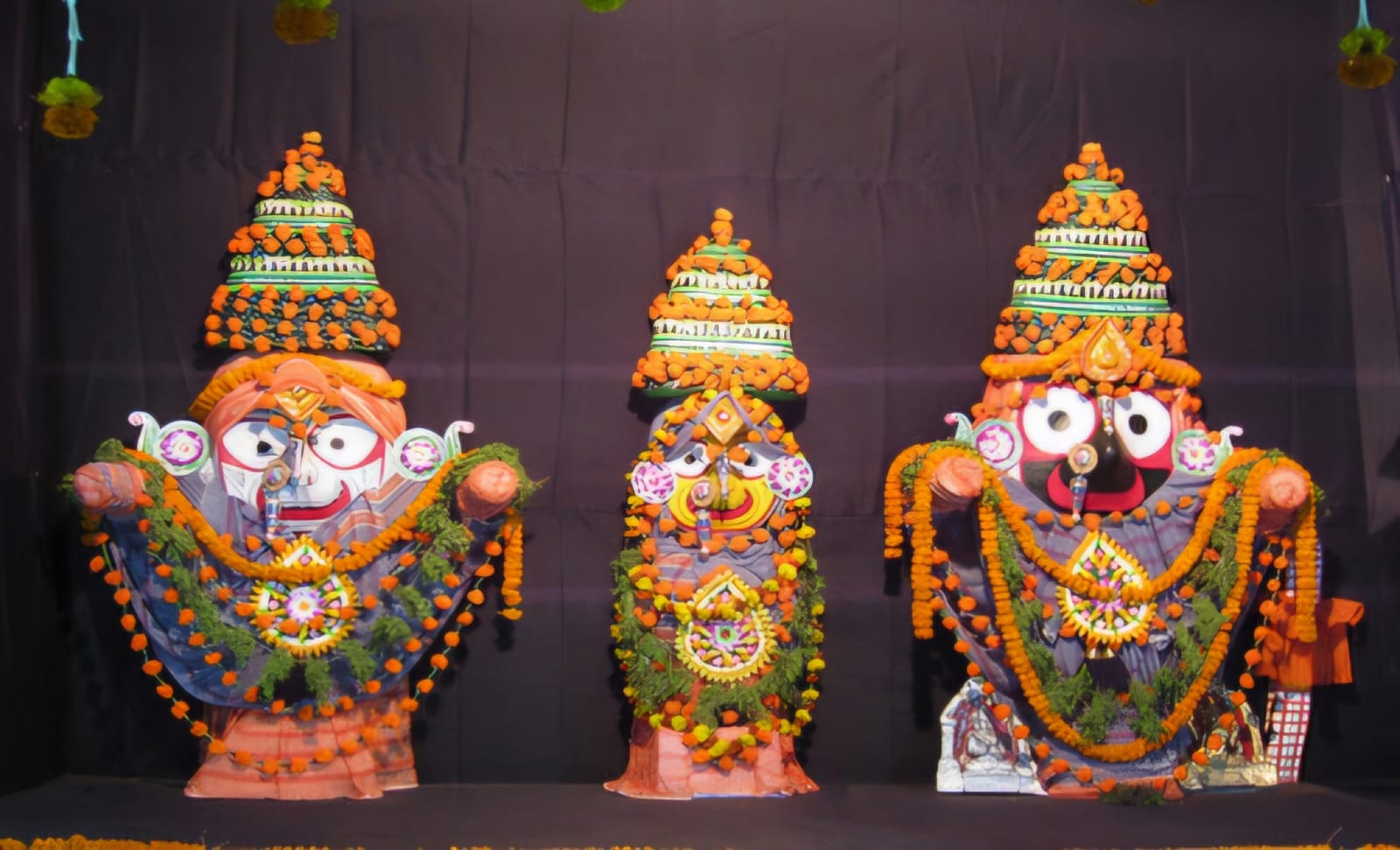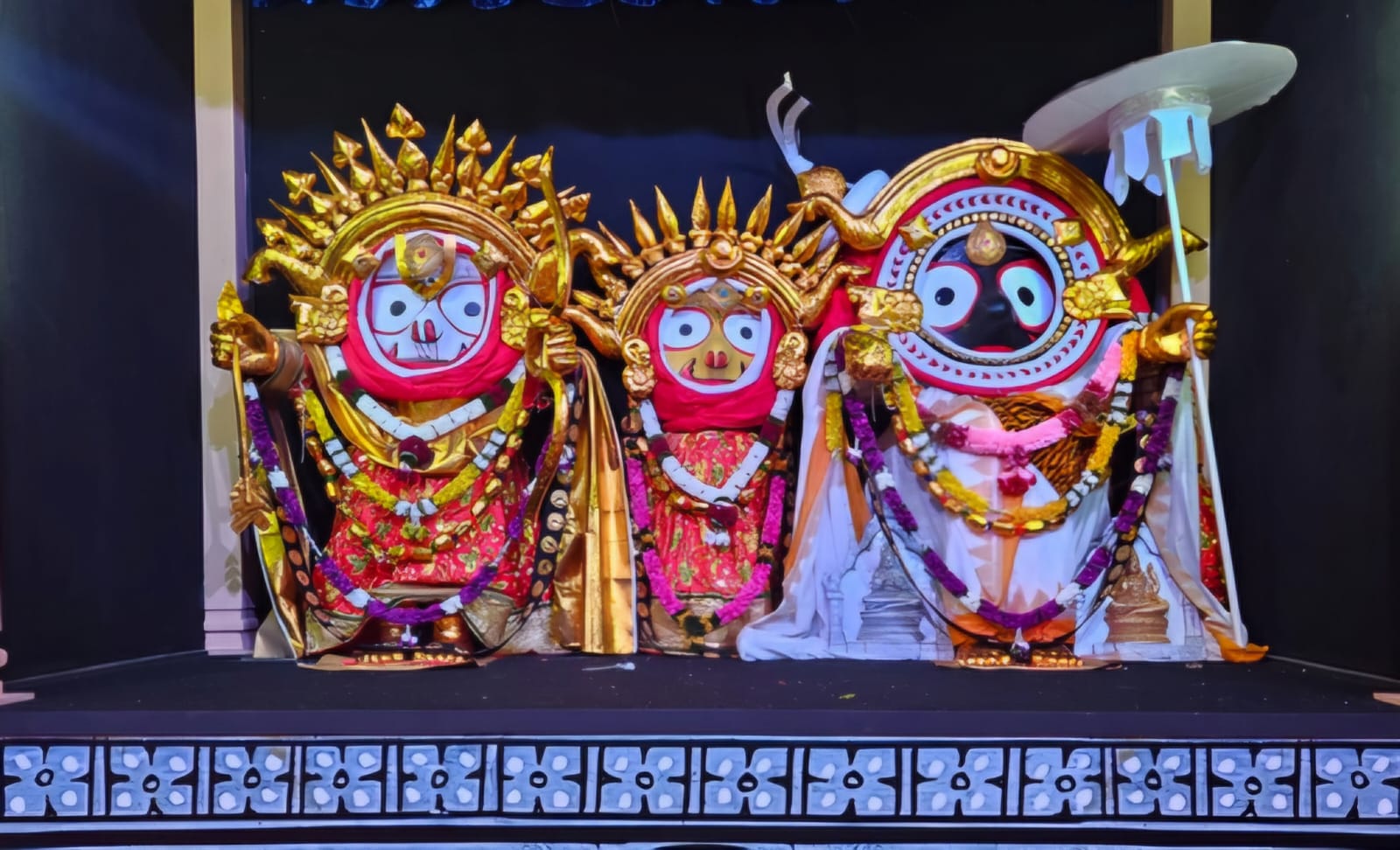
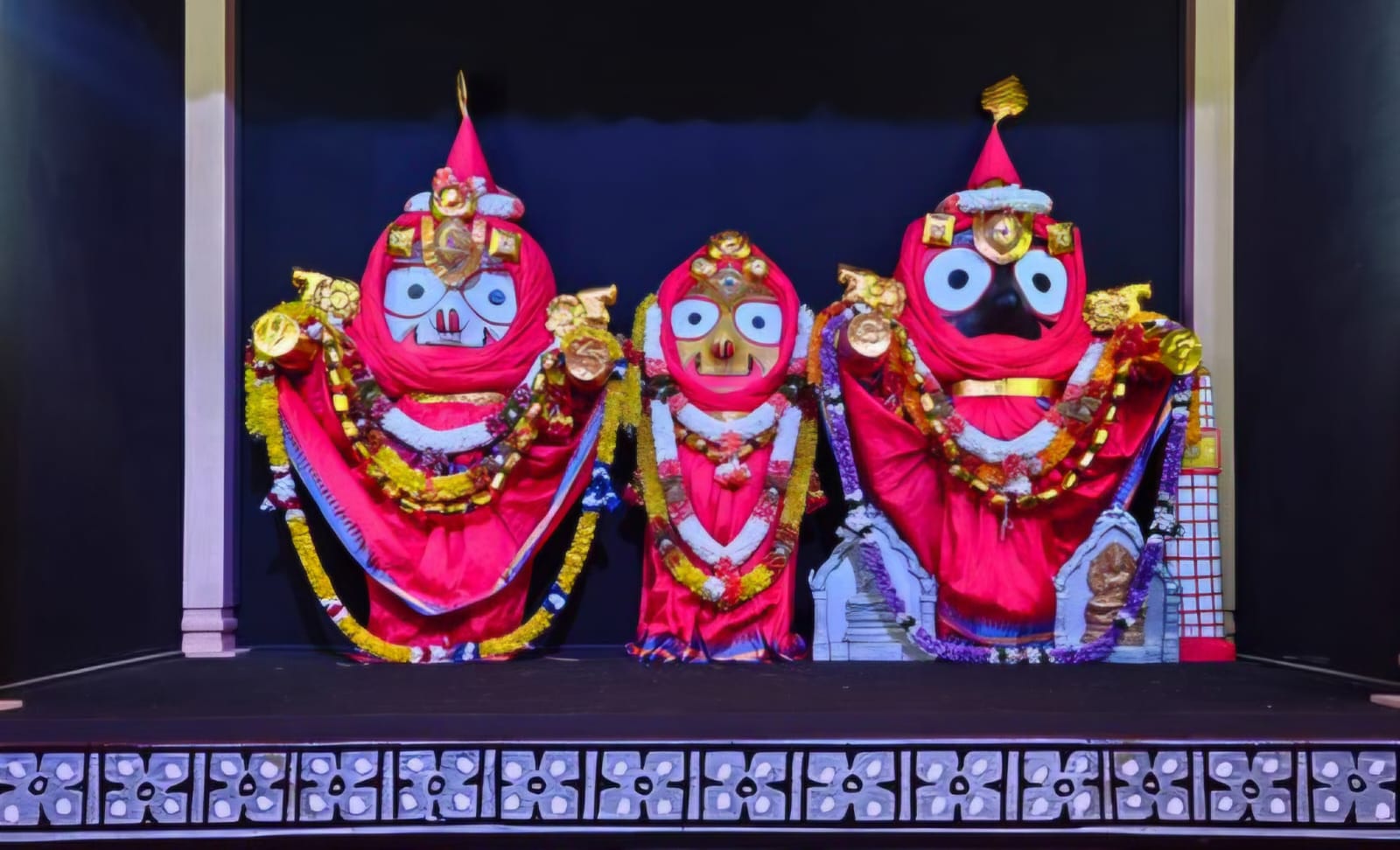
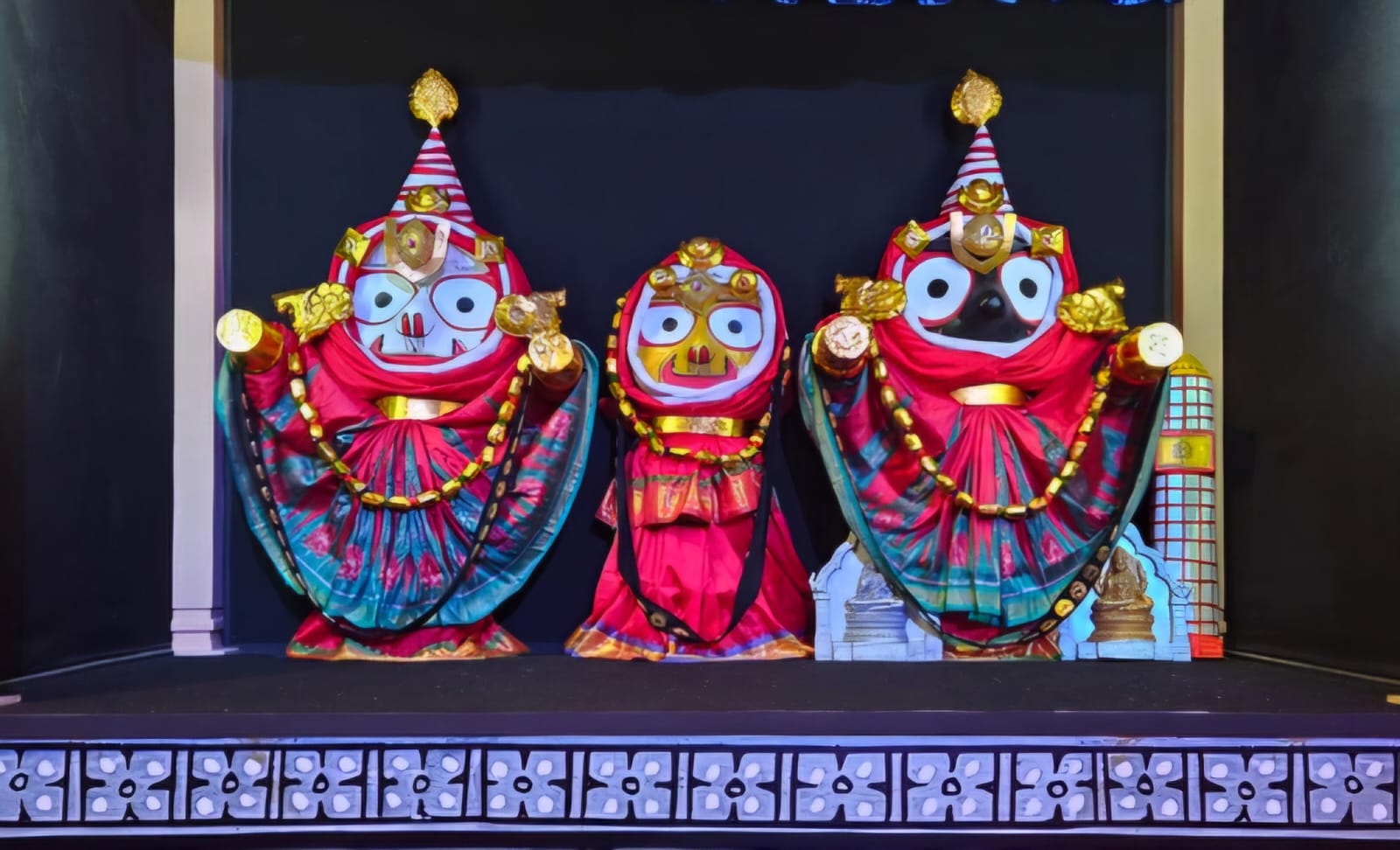
Radha Damodar Besha
When this Besha observed?
In the month of Kartik, Lord Vishnu is worshipped by the name Damodara. This month is considered the holiest month and is very dear to Lord Vishnu. Every year, from Ashwina Shukla Ekadashi to Kartik Shukla Dashami, the sacred “Radha–Damodara Besha” of the deities is observed on the Ratna Singhasana in the Sri Jagannath Temple.
About Radha Damodara Besha :
According to mythology, when Akrura was going to Mathura, he bathed in the Yamuna River and had the divine vision of the Radha–Damodara Besha within the water.
According to the temple tradition at the Jagannath Temple, after the besha ceremony, the floral ornaments removed from the deities are to be presented to the King and Queen. It is said that once a temple servitor, Narayan Mahapatra, placed the flower garland in the hair of the devadasi Lavanyavati. Later, when the King was about to present the same garland to the Queen, he noticed a strand of hair in it. Becoming angry, he ordered Narayan Mahapatra to show that Lord Jagannath had hair; otherwise he would be punished.
To protect his devotee, Jagannath manifested hair on His head. The next day, when the King saw the hair and pulled it to test it, blood started oozing out. Since that day, the sacred Radha–Damodara Besha of the Lord has been traditionally performed.
The Radha–Damodara Besha has several mythological foundations. The name of Vishnu or Jagannath during the month of Kartik is Damodara. This name is associated with Krishna from the Dvapara Yuga. The word “Dama” means rope. According to mythology, Nalakuvara and Manigriva, the sons of Kubera, became arrogant and intoxicated with wealth and forgot their duties. Therefore, the sage Narada cursed them. As a result, they were born on earth as two Arjuna trees.
When the child Krishna uprooted those two trees, their pride was broken and they were liberated from the curse. According to Vyasa in the Sanskrit scripture Srimad Bhagavatam, this incident happened during Krishna’s childhood.
Once, Yashoda tied Krishna around his waist with a rope and fastened the rope to a wooden mortar. When Krishna crawled between the two Arjuna trees, the mortar got stuck between them. As he forcefully pulled the rope tied to his waist (udara), the two trees were uprooted. Since a rope (dama) was tied around his belly (udara), Krishna came to be known as Damodara.
Following this belief, during the Radha–Damodara Besha at the Jagannath Temple, Jagannath and Balabhadra wear a golden rope or waist-belt around their waist. In this attire, they wear Trikachha garments, golden arm ornaments, earrings, and tilak on the face. Artificial hair made of bamboo strips and cloth is placed on the head, decorated with a crescent-shaped ornament.
But why is it called Radha–Damodara Besha? In the literary work Mathura Mangala by Bhakta Charana Das and in other poems, there are descriptions of Radha adorning Krishna in different attires. It is believed that since this was one of Radha’s favorite adornments of Krishna, the attire came to be known as Radha–Damodara Besha.
During this month, women observe the Rai–Damodara Brata, where Radha (Rai) and Damodara (Krishna) are worshipped together.
Special Features of Radha–Damodara Besha :
Kartik Month Significance
This besha is observed during the sacred month of Kartik, when Vishnu is worshipped as Damodara. Kartik is considered the holiest and most प्रिय month of Vishnu.
Golden Rope Around the Waist
A special golden rope (Dama) or waist ornament is tied around the waist of Krishna (represented by Jagannath). This symbolizes the childhood story where Yashoda tied Krishna with a rope.
Special Costume and Decoration
In this besha, Jagannath and Balabhadra wear Trikachha garments, golden arm ornaments, earrings, tilak, and decorative hair ornaments.
Association with Radha
The besha is called “Radha–Damodara” because Radha is believed to have adorned Krishna in this form, according to devotional literature.
Connection with Krishna’s Childhood Leela
The besha commemorates the story of Krishna uprooting the two Arjuna trees and liberating Nalak
Keywords:
radha damodar
damodara
Tags:
leela
special